
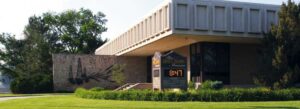
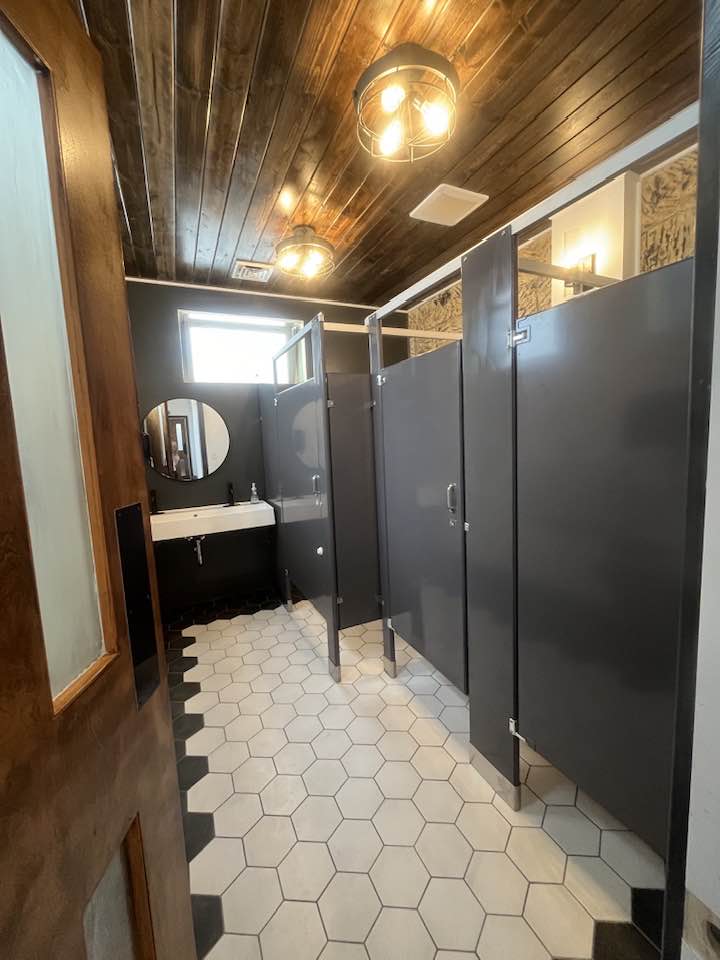
CODELL – Newly renovated restrooms in the limestone building that had served as a school and is now Codell’s community center have made the community landmark more attractive for public and private events.
Another notable building, a horse barn that survived a 1918 tornado and has since been used as a blacksmith shop, bus barn repair shop and auto repair shop, was also renovated. The Codell community has partnered with Toby Flores, an instructor at Fort Hays State University, to bring students to Codell for hands-on projects and blacksmith training. Together, they will refurbish the blacksmith’s tools and equipment inside the shop, ensuring it is fully functional for future educational use.
The community of Codell has a unique history, which landed it on the pages of Ripley’s Believe It or Not. For three successive years, 1916, 1917, and 1918, on the 20th day of May, tornados struck the community. The first year the twister passed at the west edge of town in the late afternoon. The second year it passed very close to the east edge of town in mid-afternoon. The third year, it came after dark wiping out a large part of town.
A two-story school building constructed in 1894 was destroyed in the 1918 tornado. It was replaced by a brick building erected in 1920, which served as both grade school and high school for 20 years,. From 1938 to 1940, Works Progress Administration crews constructed the a limestone school and gymnasium currently serving as the community building.
On May 20, 2018, the town of Codell celebrated the dedication of a new sculpture, placed in front of the gymnasium building, to commemorate the 100th Anniversary of the 1918 tornado. Well over 100 people came to commemorate the historic event.
The building is currently used for a wide variety of community events, including musical concerts, social gatherings, family reunions, school reunions and community Fun Nights. It is owned and maintained by Township 12.
The gymnasium restrooms had been unused for decades, but the increasing number of community gatherings created a clear need for their restoration. A new septic system, new fixtures, flooring, lighting, and a wooden ceiling were among improvements made.
A dedicated team of volunteers played a crucial role in the project, assisting with the installation of wood ceilings and bathroom stalls, painting, staining, door and trim installation, as well as clean-up and organization. Their hard work and commitment were invaluable in bringing this project to completion. A Hansen Foundation grant covered a portion of the costs of the project.